Case study · Business
Terms
The pricing decision layer for high-ticket freelancers. Answer six sharp questions about an inquiry and get a verdict: what to charge, how to structure it, and when to walk away.
-
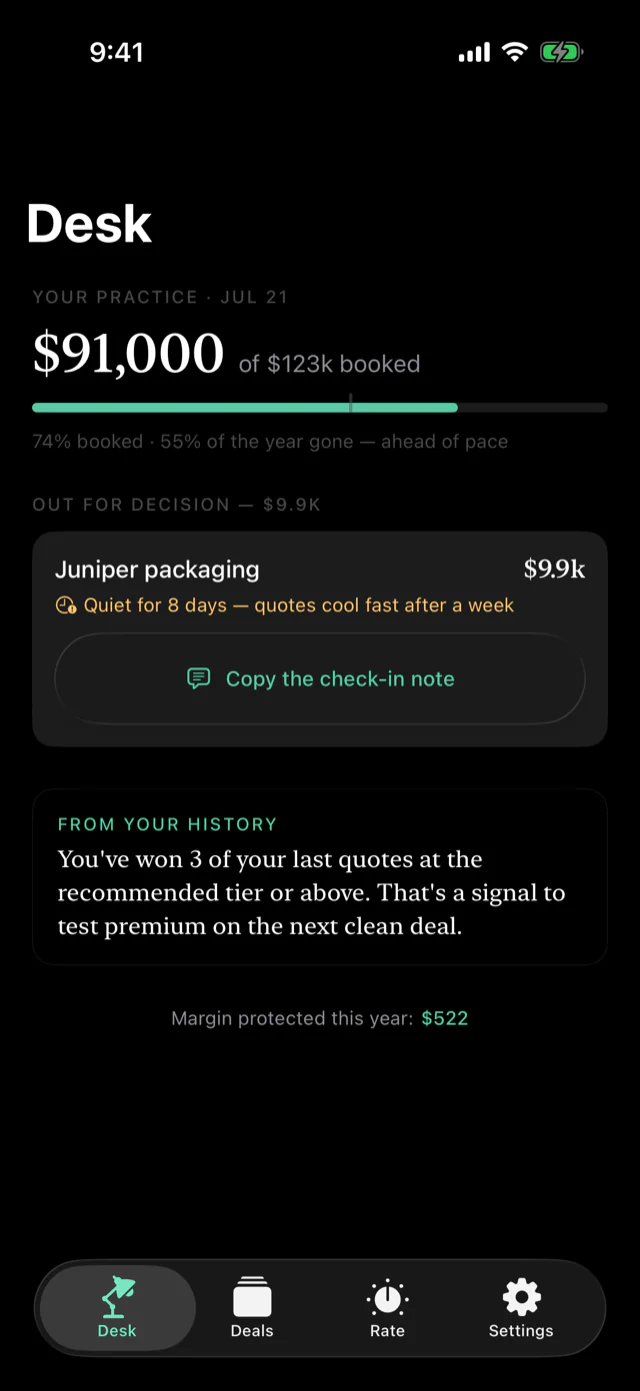
The Desk, your practice at a glance: what's booked, what's out, and what's going quiet.
-
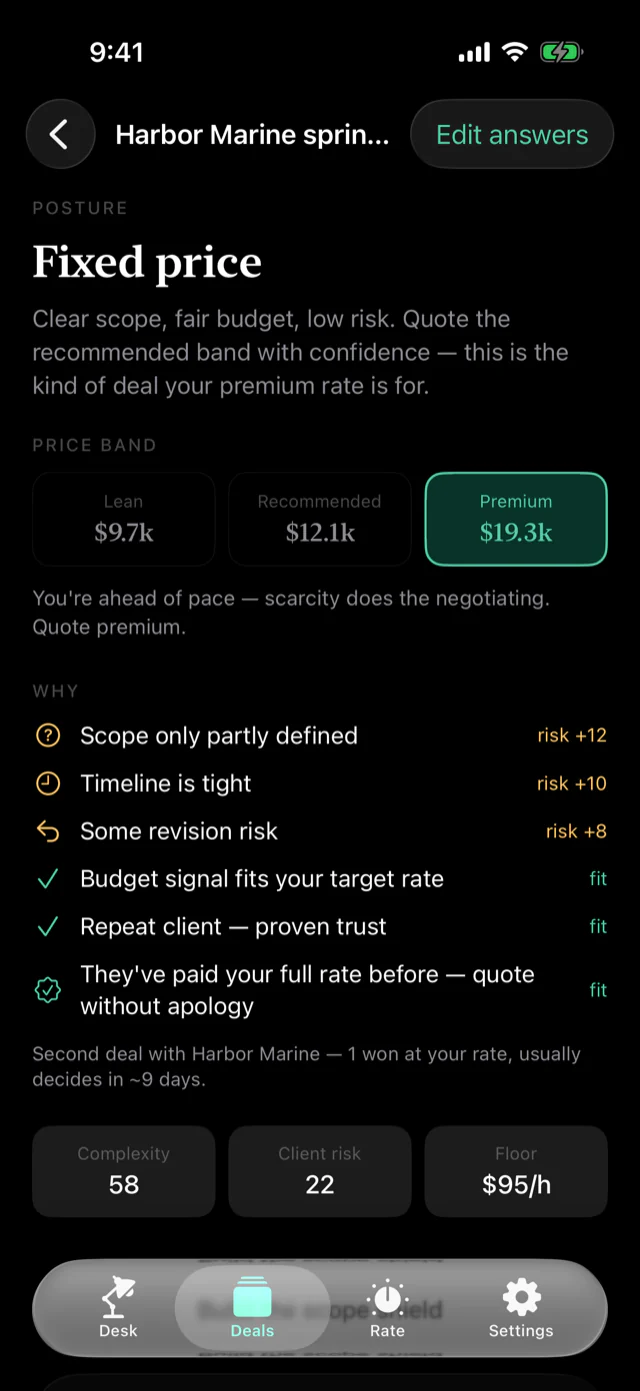
Six questions become a verdict: a posture and a price band, with every flag that fired.
-
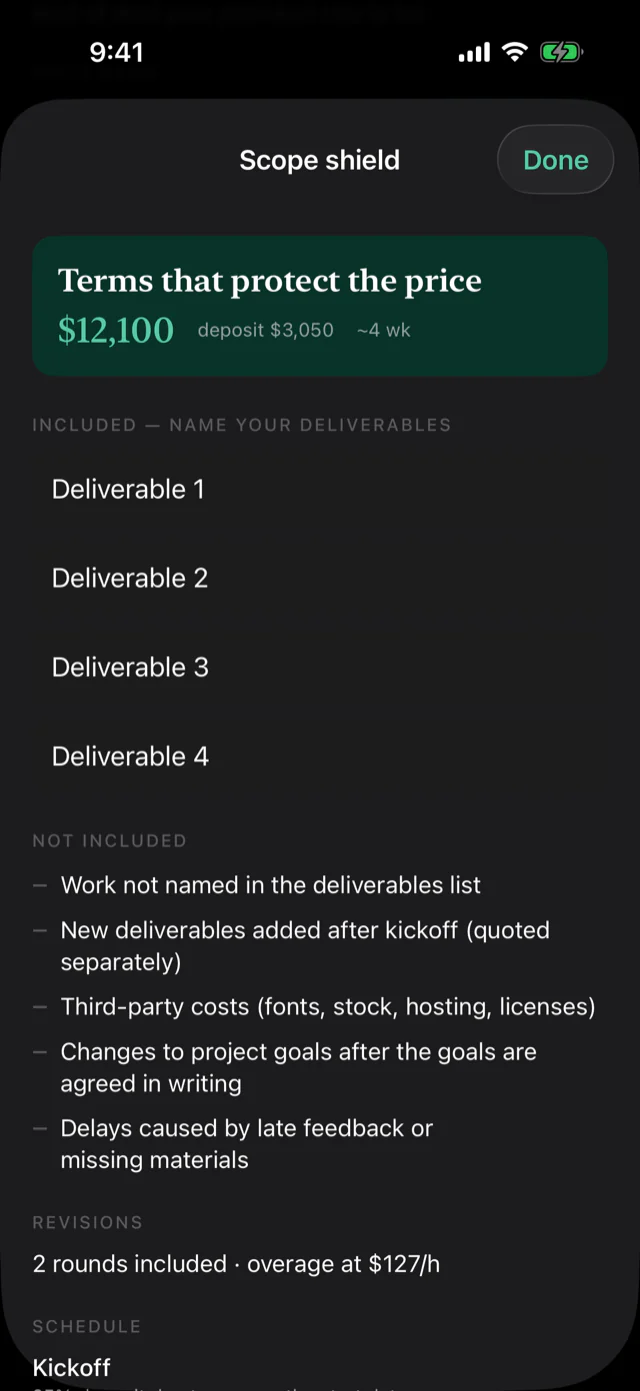
A scope shield turns the verdict into clean, copyable, client-facing terms.
-
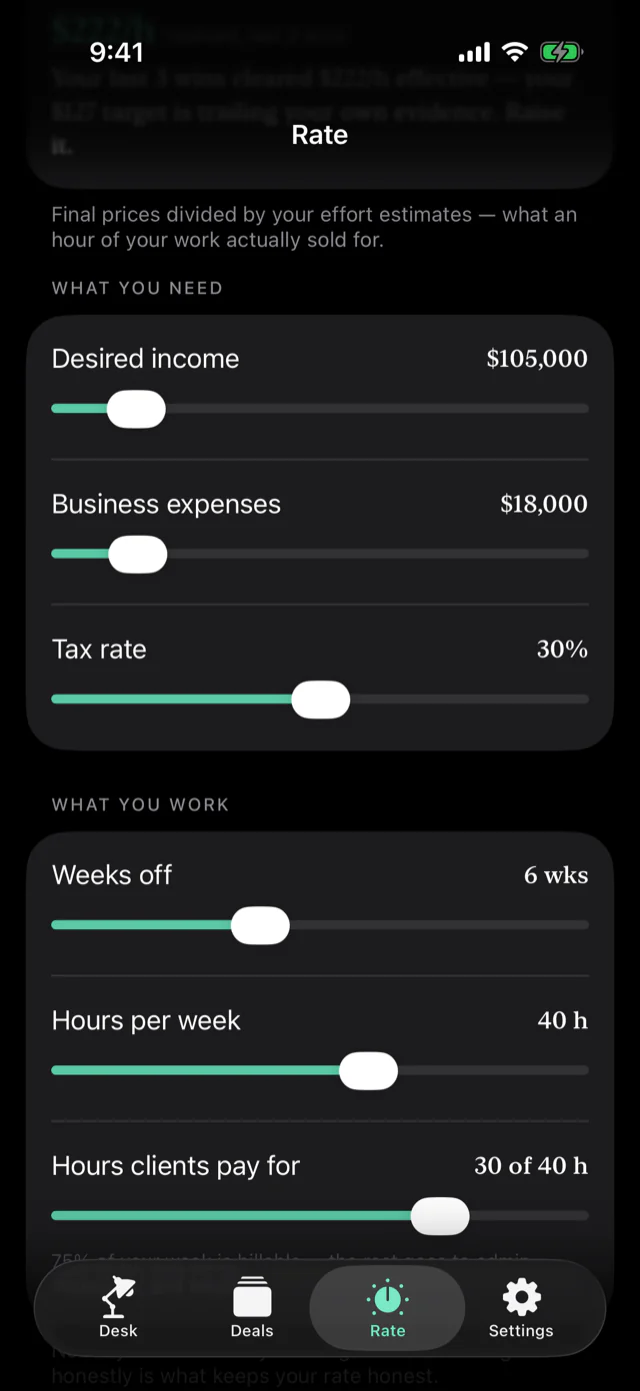
A rate foundation built from honest inputs: a floor, a target, and a premium you can defend.
The problem
High-ticket freelancers lose money at one moment: the quote. Price too low and you resent the work; price high without a reason and you lose the deal. Most rate calculators hand back a single number with no read on the actual inquiry in front of you.
The approach
Terms makes the twenty minutes of clear-headed thinking every deal deserves systematic. A two-minute rate foundation turns income, expenses, and the hours clients actually pay for into three defensible numbers. Then six sharp questions about an inquiry produce a posture: fixed price, paid discovery, retainer, or a graceful no, with the reasoning in plain language and every risk flag shown.
Each verdict comes with a scope shield and negotiation scripts templated with your real numbers. Your rates, deals, and notes never leave the device.
What we built
A native iPhone app in Swift and SwiftUI: a rate foundation with market-range context, a six-question deal analyzer with transparent scoring, copyable scope terms and negotiation scripts, a daily "Desk," and outcome tracking that learns which postures you win. Private by architecture: your business data stays on the device.
Contact
Have a product in mind? Let's talk.
A sentence or two about your product and timeline is plenty. I reply within 2-3 business days.